Does Upholstery Cleaning Actually Work? An Honest Answer — Including When It Doesn't
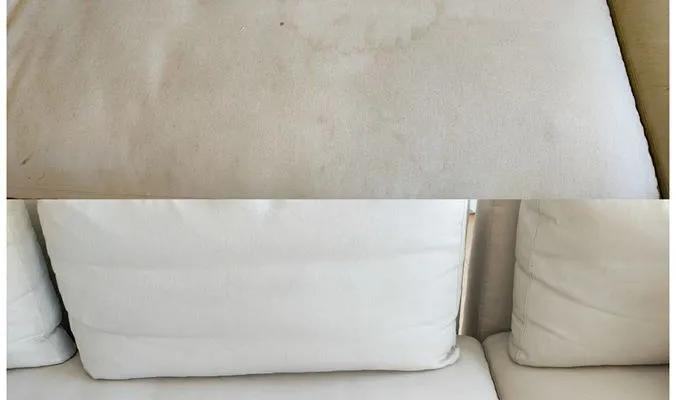
It is a fair question, and people usually ask it in a slightly embarrassed way, as though it might be rude. It isn't. You are being asked to pay a few hundred shekels for something whose result you cannot see in advance, by an industry that has its share of operators who overpromise. Scepticism is the correct starting position.
So here is the honest answer, from a company that has been doing this since 2012: yes, it works — for dirt. It does not work for damage. Almost every disappointed customer we have ever met was, without realising it, expecting the second thing.
What it genuinely removes
A sofa is a sponge with fabric stretched over it. Over years it absorbs skin cells, body oils, hair, food particles, street dust that walks in on clothes, and — in most Israeli apartments with a balcony door open half the year — a steady deposit of outdoor grit and traffic soot.
A household vacuum takes the surface layer. It does not reach what has settled into the foam. Hot-water injection and extraction does: solution goes in under pressure, the dirt is separated from the fibres, and the vacuum stage pulls it back out.
The proof of this is not marketing, it is the extraction tank, and you are welcome to look at it. The water that comes out of a sofa that looked clean when we arrived is consistently, genuinely black. Customers routinely ask to photograph it. It is the single most convincing thing about the job and it costs us nothing to show you.
On the health side: clinical testing on steam washing and extraction shows microorganism levels — bacteria, yeast, mould — dropping by an average of 92.5%. The practical benefit most people notice is with dust mites, or rather with the allergen they leave behind, which is the part that actually triggers symptoms. If someone in the house has asthma or allergies, the mattress and the sofa are the two highest-value items in the home to have cleaned.
What it cannot fix — and no one else can either
This is the part of the conversation that other companies tend to skip, and it is the reason some people conclude cleaning "didn't work".
Cleaning removes dirt. It does not reverse wear. Specifically, it will not fix any of the following, and anyone who tells you otherwise is selling you a disappointment: leather that has cracked or split, fabric that has thinned or worn through on the arms and seat fronts, colour that has faded from years of sunlight, permanent dye damage from bleach or certain inks, or the flattening and loss of shape in foam that has simply aged.
Sun fade is worth singling out because it catches people out constantly in this country. A sofa positioned near a south-facing window loses colour unevenly, and the shaded section stays darker. After cleaning, the contrast is often more visible, not less — because the dirt that was partially masking the difference is now gone. The sofa is cleaner and the fade looks worse. That is not a failed clean; it is the fade becoming visible.
Pet urine that has soaked through to the foam and the frame is its own category. Surface cleaning will not resolve it, because the source is underneath. It sometimes needs the cushion opened up, and occasionally the honest recommendation is replacement of the affected foam rather than repeated cleaning.
Why some professional jobs still disappoint
Assume the fabric is fine and the dirt is ordinary. There are still three ways for a job to go badly, and all three are about technique rather than the method.
Under-extraction. If the operator injects solution and does not pull enough of it back out, detergent stays in the fabric. It dries hard, which is why the sofa feels stiff or slightly crunchy afterwards — and worse, soap residue is sticky, so it attracts dirt faster than before. A sofa that gets visibly dirty again within weeks was almost certainly not extracted properly. This is the single most common complaint about upholstery cleaning and it is entirely avoidable.
Over-wetting. Upholstery is not carpet. Carpet sits on a floor and dries from above; a sofa has foam underneath that holds water and dries slowly. Using carpet pressure and carpet moisture levels on a sofa pushes water into the foam, and the result is a piece that stays damp for days and can develop a musty smell. Rented machines are usually configured for carpet.
Wrong material for the fabric. Covered in detail in our article on the W, S, WS and X cleaning codes — but briefly, some fabrics react badly to water, and applying it creates rings that are permanent.
How to judge it without gambling
You do not have to take anyone's word for this, including ours. Ask for a demonstration: one section, one cushion, cleaned in front of you at no cost and with no obligation, so you can compare it against the section next to it.
That is not a sales gimmick, it is the most efficient way to settle the question. If the difference is obvious, you have your answer. If it isn't — because the piece is worn rather than dirty — you have also got your answer, and you have saved yourself the money. We would rather tell you that at the door than take payment for a result you will be unhappy with.
It is also worth asking what equipment a company uses, and being wary of anyone vague about it. There is a real difference between professional injection-extraction equipment and a machine hired by the hour.
So is it worth it?
If your furniture is structurally sound and simply dirty, yes — clearly and visibly, and for a fraction of what replacing it costs. A living-room set that comes up well is a piece of furniture you keep for several more years instead of replacing.
If your furniture is worn out, cracked, faded or broken down in the foam, cleaning will make it a clean version of a worn-out sofa. That is sometimes still worth doing, particularly before guests or a sale — but go in knowing that is what you are buying.
The distinction between those two situations is usually obvious within a minute of looking at the piece, and any honest company will tell you which one you have before taking your money.
Send a photo and get a quote within minutes.